
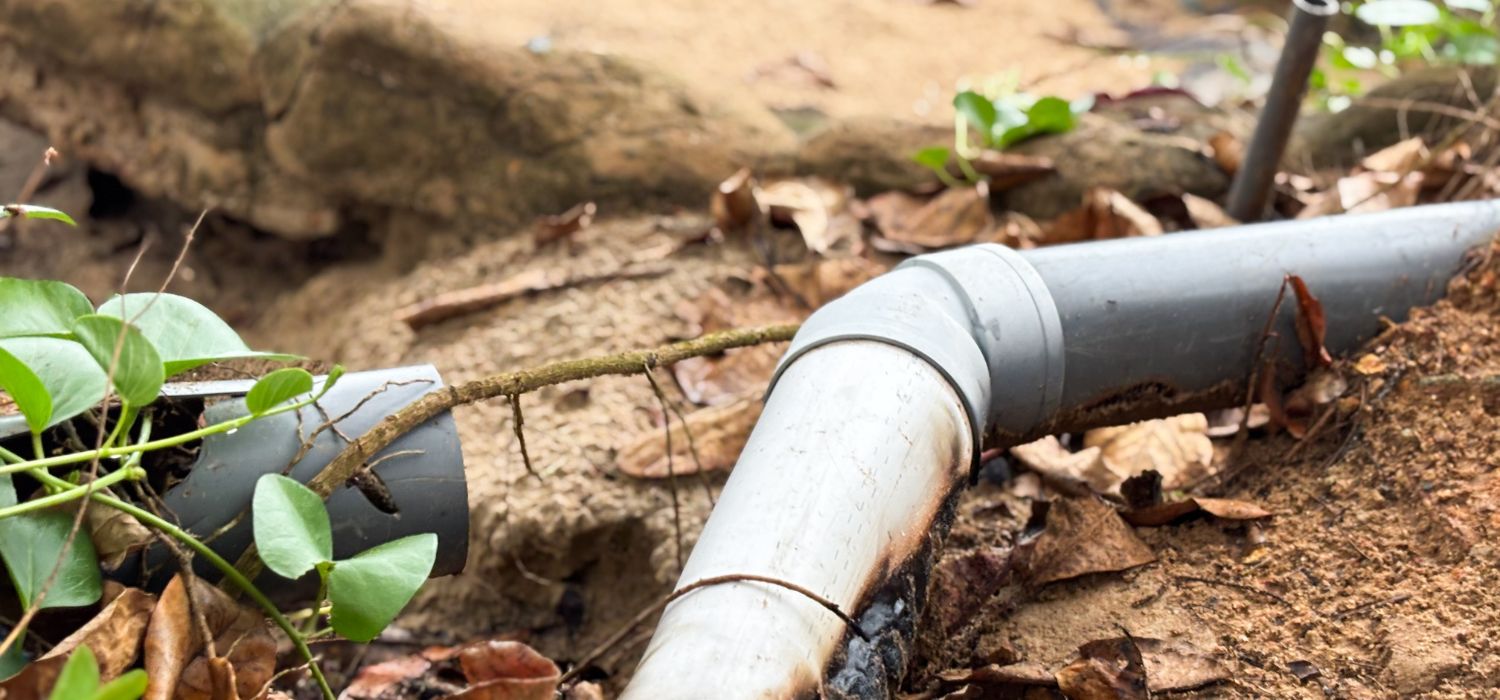
Ever notice your drains acting a little “off,” then suddenly everything backs up like your pipes just gave up on life? Yeah…our plumbers see that a lot. And more often than not, tree roots are the troublemakers behind the scenes. In fact, roots are responsible for a huge chunk of sewer blockages across the country, and based on what we see every day, that checks out.
If you’ve got mature trees on your property, your sewer line might already be on their radar. Roots are always on the hunt for water, and your pipes are basically sending out an underground invitation. Let’s break down how this happens, why spring and fall make things worse, and what we do to get everything flowing again without the drama.
Roots don’t bust into pipes like a wrecking ball. They’re sneakier than that.
They find tiny openings, things like small cracks, loose joints, or aging materials. Once they find moisture, they move in and settle down. From there, they grow, spread, and turn into a tangled mess that catches everything passing through your line.
Toilet paper, wipes, grease, debris…it all starts piling up. What began as a small entry point turns into a full-blown clog party.
Older pipes also tend to be easier targets, especially clay and cast iron. But even newer systems can run into trouble if something shifts or cracks.
If we’re being honest, your sewer line is kind of a dream spot for roots. It’s warm. It’s damp. It’s full of nutrients. Basically, it’s the underground version of a five-star buffet.
Most feeder roots sit close to the surface, usually within the top foot or so of soil. That just so happens to be right where many residential sewer lines run. So even if that tree looks far away, its roots could already be exploring your pipes.
Once roots find a steady water source, they don’t leave. They keep growing, thickening, and holding onto anything they can grab.
If you feel like your plumbing acts up more during spring and fall, you’re not imagining things. These seasons create the perfect conditions for root growth.
In the spring, everything wakes up. Roots grow fast, and wet soil makes it easier for them to push into small pipe openings. In the fall, trees shift their energy underground. Even when leaves slow down, roots keep growing as long as the soil stays warm enough.
Add in rain, changing soil conditions, and temperature swings, and suddenly those tiny pipe issues don’t stay tiny for long. That’s usually when we get the call. Slow drains turn into gurgling sounds, then backups, then the “OK, yeah, we need help right now” moment.
Root problems don’t usually show up all at once. They build slowly, then hit you all at once. Here’s what we see most often:
If multiple fixtures start acting up at the same time, that’s a big clue your main sewer line is involved. And that’s when roots are very likely part of the story.
When roots take over a sewer line, we don’t just guess and hope for the best. We go straight to the source. First, we run a sewer camera through the line. This shows us exactly where the roots are, how bad the damage is, and what the pipe looks like overall.
From there, we match the fix to the situation. For lighter issues, we can cut through roots and clear the blockage. If buildup is part of the problem, we can use high-pressure water to clean the line and remove everything the roots were holding onto.
If the pipe itself is damaged, we’ll walk you through repair options that actually solve the problem long-term, not just temporarily. And yes, we’ll explain everything in plain English. No confusing plumbing jargon, no guessing games.
Roots don’t just clog pipes. They make existing problems worse.
As they grow inside cracks or joints, they widen those openings. That can lead to repeated clogs, leaks, and, eventually, more severe pipe damage.
Older materials are especially vulnerable:
Even if we clear a clog, the underlying issue doesn’t magically disappear. That’s why recurring problems usually mean something deeper is going on.
Stopping roots gets a whole lot easier once we know where they’re sneaking in. That’s where our sewer cameras come in. We send one down the line, find the exact trouble spot, and figure out the best fix based on your pipes and your priorities. No guessing, no digging up your whole yard “just to see.”
A quick check now can save you from a full-blown backup later (and trust us, nobody wants that surprise). Regular inspections help catch small cracks and openings before roots turn them into their new favorite hangout. It also takes the guesswork out of things, so you’re not left wondering what’s going on underground.
We wish we could say there’s one magic fix that sends roots packing forever…but trees are stubborn. The best approach is a combo: keep roots away from the line, keep your pipes in good shape, and keep buildup from giving roots something to grab onto. Think of it as setting some healthy boundaries for your plumbing.
Tree roots clog sewer lines because they follow moisture, find small openings, and grow into a tangled mess that traps everything passing through. Spring and fall tend to bring more problems because soil conditions and root growth patterns make those hidden issues show up fast.
Our approach is simple. Clear the clog, find the cause, and fix it in a way that actually lasts.
If your drains are slowing down, making noise, or backing up, don’t wait for things to get worse. Contact us, and we’ll get your pipes back to doing what they’re supposed to do.
In many cases, yes. We can clear roots, clean the line, and use solutions like targeted repairs or lining to address the issue without major excavation.
They enter through cracks, loose joints, or aging pipe materials. Once inside, they grow and trap debris, leading to clogs.
Slow drains, gurgling sounds, recurring clogs, and backups are the most common signs. Wet spots in the yard can also be a clue.
Roots grow toward moisture, and your sewer line provides a steady source. Spring and fall create ideal growing conditions, so roots become more active and more likely to enter small pipe openings.
Address: 9111 Cross Park Dr Ste D269, Knoxville, TN 37923
Phone: 865-419-7383
Business Hours:
Mon - Sun: 24/7
Discounts available with Go #1 Club
When you work with us, you’re covered—plain and simple. If something’s not right, just give us a call and we’ll handle the rest. No calling the manufacturer. No waiting on hold. No headaches.
Our warranty is fully in-house, which means we cover labor, parts, and materials ourselves. You don’t have to jump through hoops or chase anyone down—we make it easy. In fact, warranty work gets bumped to the front of the line, because taking care of our customers is kind of our thing.
Other companies might hand you off to someone else. Not us. We’re your plumber, your problem-solver, and your one-call fix-it team.